
The Unsung Hero of Green Hydrogen: Why PTFE Gaskets Matter in Water Electrolysis
In the race toward a net-zero future, green hydrogen has taken center stage. Water electrolysis—splitting water into hydrogen and oxygen using renewable electricity—is one of the most promising clean energy technologies on the horizon.
But behind the headlines about breakthrough catalysts and record-breaking efficiency lies a less glamorous, yet absolutely critical component: the humble sealing gasket.
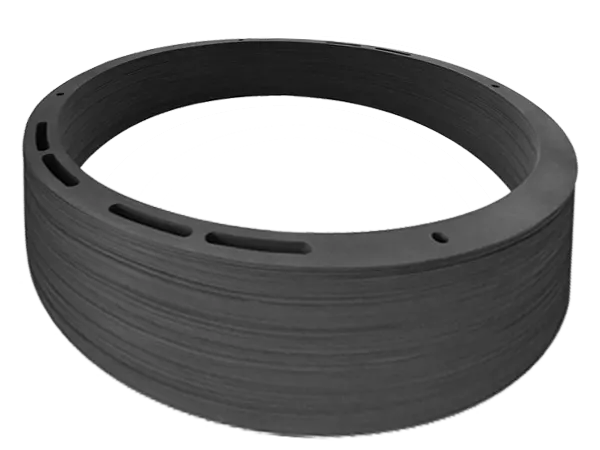
Specifically, PTFE (polytetrafluoroethylene) gaskets play an indispensable role in keeping electrolyzers safe, efficient, and durable. Let’s dive into why these fluoropolymer seals are the unsung heroes of hydrogen production.
What Does a Gasket Actually Do in an Electrolyzer?
An electrolyzer is essentially a stack of cells, each containing electrodes, a membrane, and flowing electrolytes . The gasket sits between components, serving two crucial functions:
- Sealing – It prevents hydrogen gas, oxygen gas, and corrosive alkaline or acidic electrolytes from leaking out of the cell . In a typical alkaline electrolyzer, that means containing a 20–40% potassium hydroxide (KOH) solution at temperatures up to 90°C and pressures up to 40 bar .
- Insulating – The gasket must also provide electrical insulation between adjacent cells to prevent short circuits . Without proper insulation, the entire stack could fail.
If a gasket fails, you get leaks, cross-contamination of gases (which is a serious safety hazard), reduced efficiency, and costly downtime.
Why PTFE? The Material Advantage
PTFE—better known by the brand name Teflon™—stands out from alternative gasket materials like Viton and silicone for several compelling reasons:
1. Unmatched Chemical Resistance
PTFE is virtually inert. It resists attack from the highly alkaline KOH solutions used in alkaline electrolysis, as well as the acidic environments in PEM electrolyzers . This chemical stability means PTFE gaskets don’t degrade or swell when exposed to aggressive electrolytes.
2. Excellent Thermal Stability
Water electrolysis operates at elevated temperatures—typically 40–90°C for alkaline systems and up to 100°C for PEM . PTFE maintains its mechanical properties across this temperature range, though studies show its elastic modulus decreases at higher temperatures, so careful temperature control is still needed .
3. Low Compression and Creep
This is where PTFE truly shines for industrial applications. Research comparing PTFE, Viton, and silicone gaskets found that PTFE undergoes only about 1% compressibility—essentially negligible . This stability means the gasket maintains consistent thickness and sealing pressure over time, even under long-term operation at elevated temperatures .
Silicone, by contrast, is much more compressible and shows significant degradation under torque forces, making it better suited for laboratory R&D than commercial deployment .
4. Minimal Performance Degradation
In the same study, PTFE gaskets showed negligible changes in performance even during experiments at higher temperatures, while Viton and silicone exhibited greater variations . This stability translates directly to longer electrolyzer stack life and reduced maintenance costs.
PTFE vs. Alternative Gasket Materials
| Property | PTFE | Silicone | Viton |
|---|---|---|---|
| Chemical resistance | Excellent | Good | Good |
| Compressibility | ~1% (very low) | High | Moderate |
| Thermal stability | Excellent up to 260°C | Moderate | Good |
| Long-term durability | Excellent | Moderate | Moderate |
| Best application | Industrial/commercial | Lab/R&D | General-purpose |
*Data compiled from Singh & Selvaraj (2025) *
Challenges and Innovations in PTFE Gasket Design
PTFE is not without its challenges. Pure PTFE has a tendency toward “cold flow” (creep under sustained load), which can lead to gradual loss of sealing force. Manufacturers have responded with modified PTFE compounds:
- Filled PTFE – Incorporating materials like barium sulfate improves creep resistance and mechanical strength .
- Modified Processing – Advanced welding and molding techniques allow production of gaskets with excellent dimensional stability, even for large-diameter electrolyzer cells (over 1.5 meters in some alkaline systems) .
One manufacturer describes their modified PTFE gasket as having “excellent compressibility, resilience, and low creep relaxation, along with strong adaptability under dynamic conditions and long-term sealing stability” .
The Big Picture: PTFE Gaskets and the Hydrogen Economy
As the world scales up green hydrogen production, the demand for reliable, long-lasting electrolyzer components will only grow. Industry forecasts project China’s hydrogen demand reaching 37 million tons by 2030 and 97 million tons by 2050, with water electrolysis expected to supply a growing share .
For this scale-up to succeed, we need components that can perform reliably for thousands of hours in demanding industrial conditions. PTFE gaskets, with their chemical resistance, thermal stability, and minimal compression, are uniquely positioned to meet this challenge .
Research by Singh and Selvaraj concludes that “PTFE gaskets are seemingly the best choice … for industrial applications with negligible degradation, even in experiments carried out at higher temperatures” . This makes them the preferred choice for megawatt-scale hydrogen production facilities.
Conclusion
While they may never appear in flashy headlines, PTFE gaskets are foundational to the success of water electrolysis technology. They seal, insulate, and endure, quietly enabling the green hydrogen revolution.
For engineers and operators designing or maintaining electrolyzer systems, choosing the right gasket material isn’t just a technical detail—it’s a critical decision that impacts safety, efficiency, and the bottom line. And in most cases, PTFE is the answer.